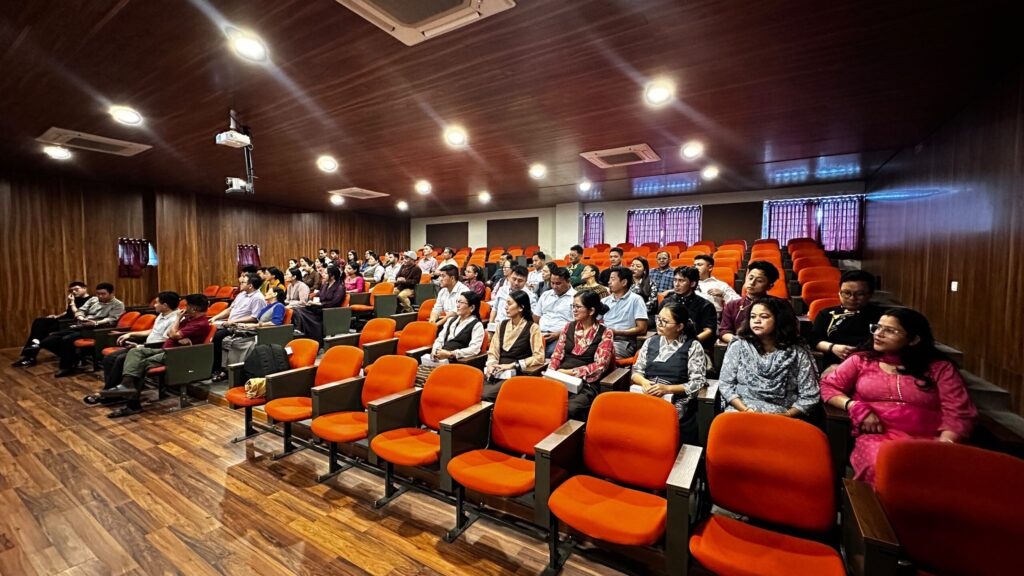
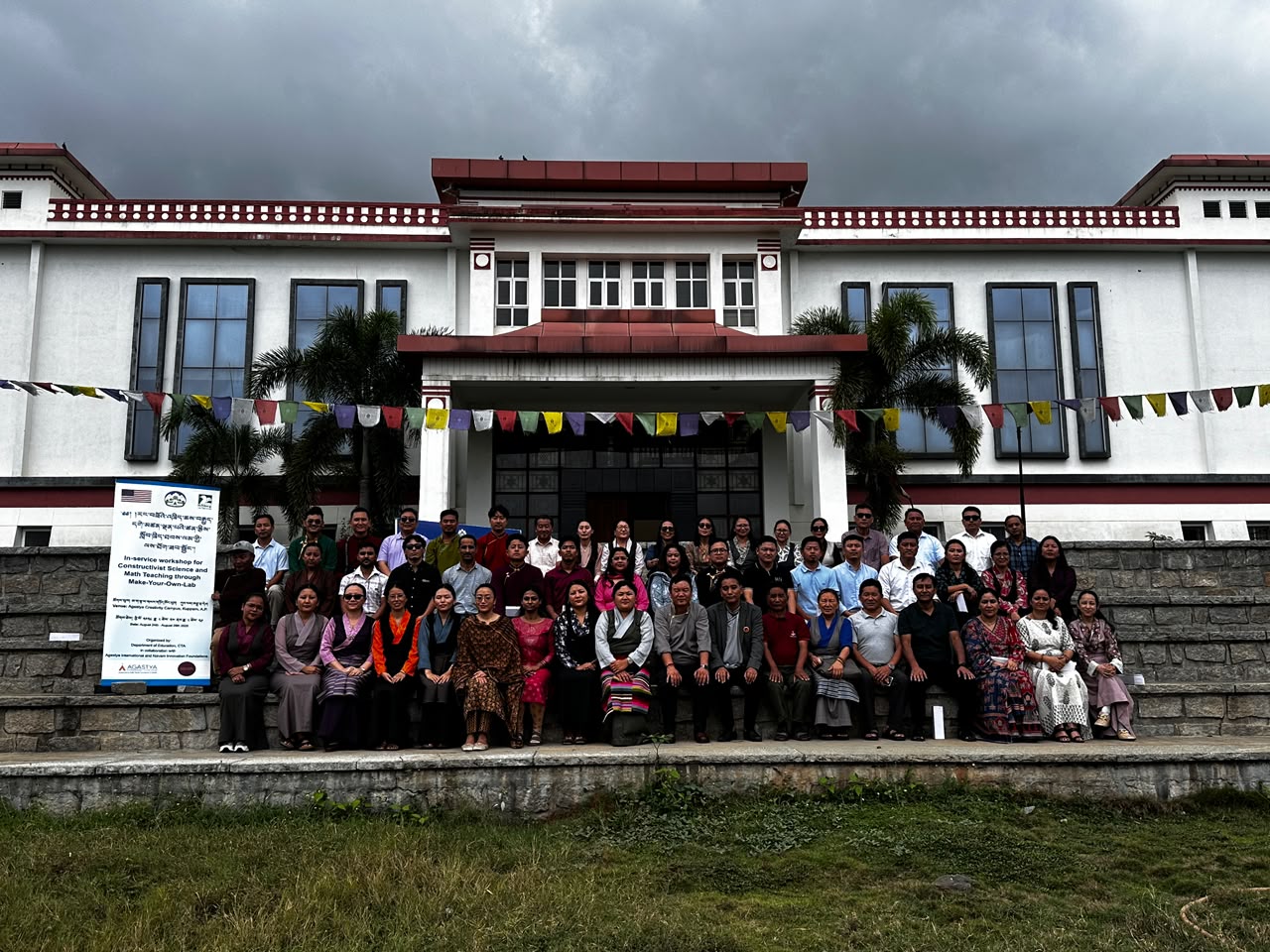
Dharamshala: The Department of Education (DoE), Central Tibetan Administration (CTA), successfully concluded a four-day in-service workshop on constructivist pedagogy and “Make Your Lab” activities for science and mathematics teachers. Held at the Agastya Creativity Campus in Kuppam, Andhra Pradesh, the programme was followed by a two-day training on the effective use of mathematics laboratory teaching materials for selected Tibetan schools.
The workshop brought together 50 teachers from Tibetan schools across India, comprising 25 science teachers and 25 mathematics teachers. With each school deputing one science teacher and one mathematics teacher. The programme aimed to strengthen classroom practices and promote engaging, activity-based, and learner-centred approaches to science and mathematics education.
The programme began on 22 August, when the participating teachers assembled at the Dalai Lama Institute for Higher Education in Bengaluru. The Department conducted an orientation programme, followed by a seminar on the current educational situation in Tibet. On 23 August, the teachers travelled to the Agastya Creativity Campus in Kuppam for the main training programme.
The four-day workshop commenced on 24 August under the guidance of Mr. Manjunath, Head Trainer of the Agastya training team at Agastya Vidyachal Academy. During the initial sessions, participants explored the principles of constructivist teaching and learning, which emphasise that students learn more effectively by actively engaging with ideas through experiences, interaction, questioning, discussion, inquiry, and reflection.
The sessions focused on the Zone of Proximal Development and the 5E instructional model—Engage, Explore, Explain, Elaborate, and Evaluate. These approaches helped teachers plan learner-centred lessons, identify students’ prior knowledge, provide suitable scaffolding, and support them in becoming more confident and independent learners. Teachers were encouraged to move beyond textbook-based instruction by creating opportunities for students to observe, investigate, test ideas, and draw conclusions.
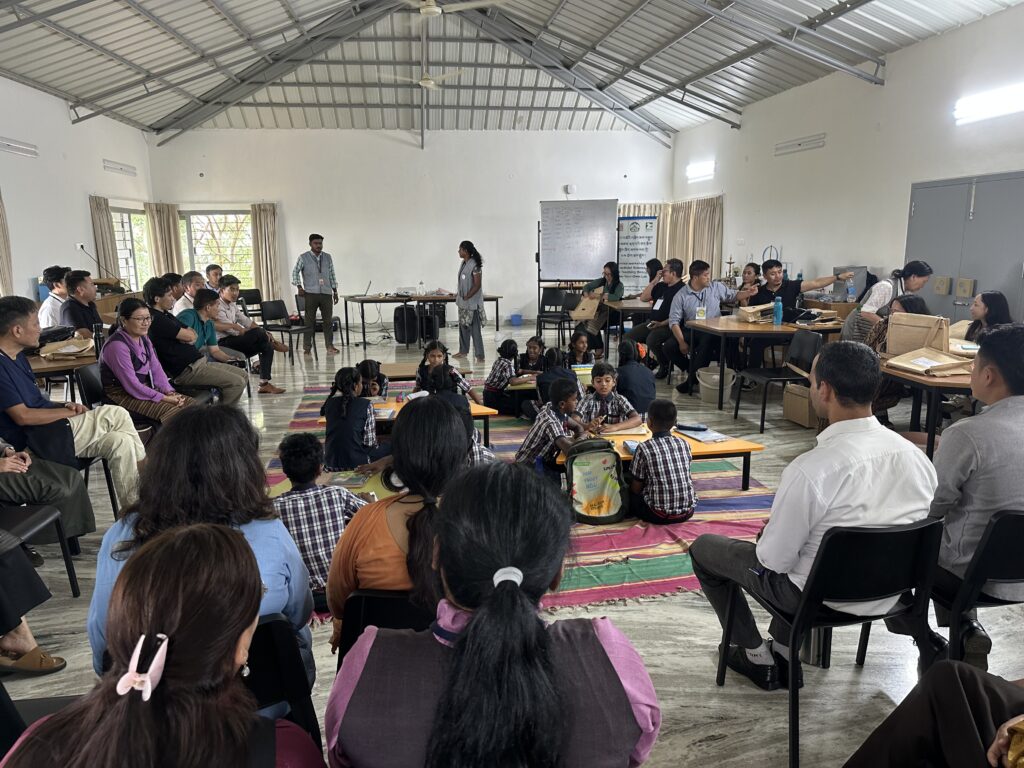
The Agastya team conducted a model classroom session with local Grade VIII students, allowing participants to observe activity-based and inquiry-oriented teaching in practice. Teachers witnessed how hands-on activities, group work, guided questions, discussion, and appropriate teacher support can improve students’ conceptual understanding.
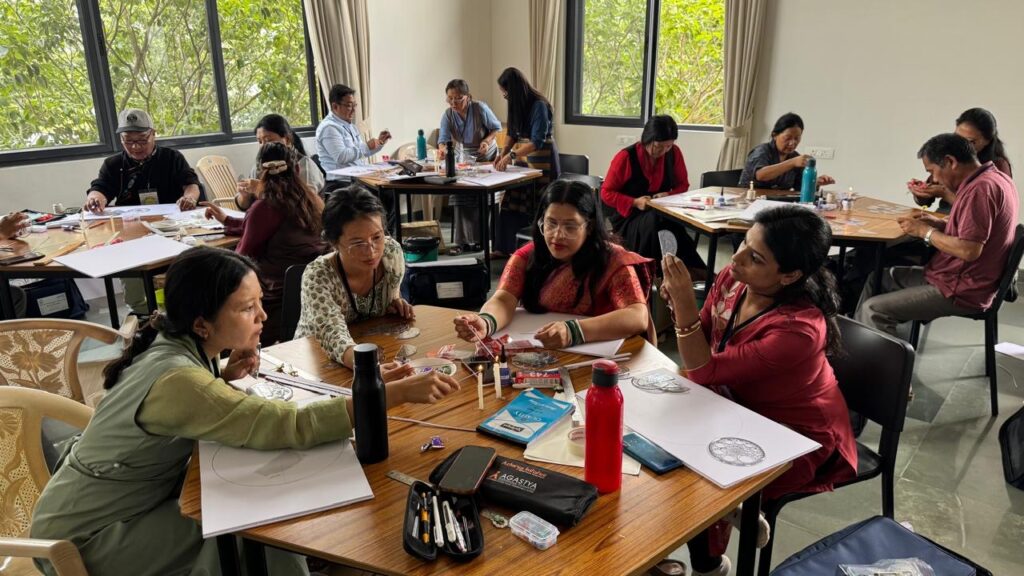
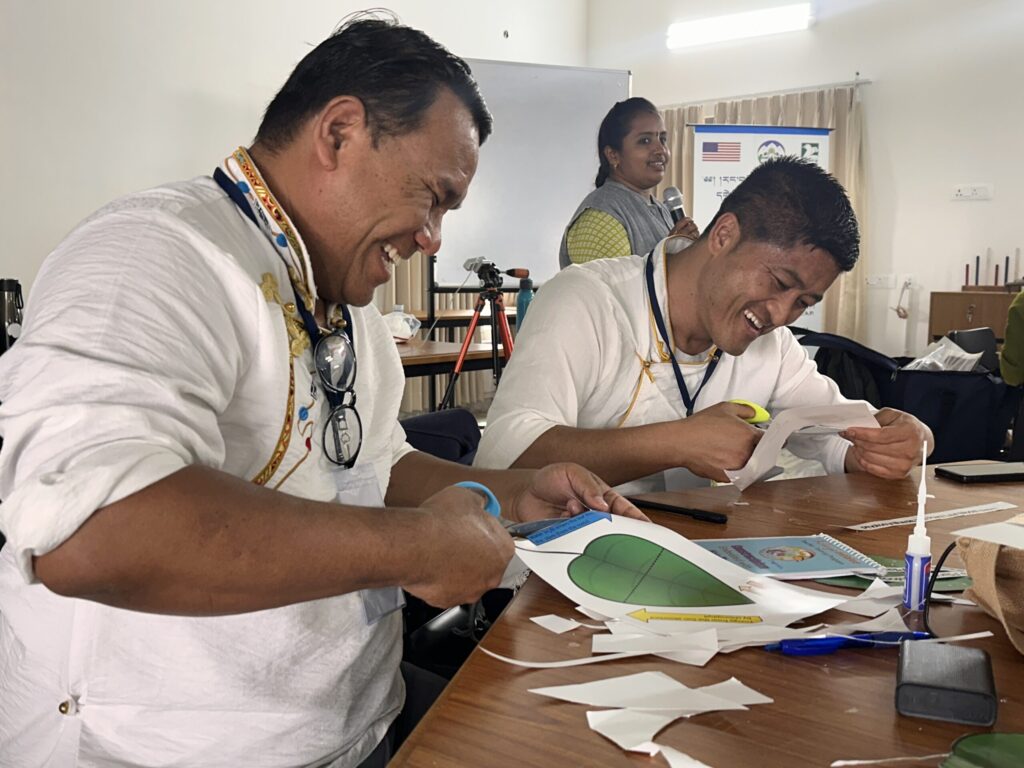
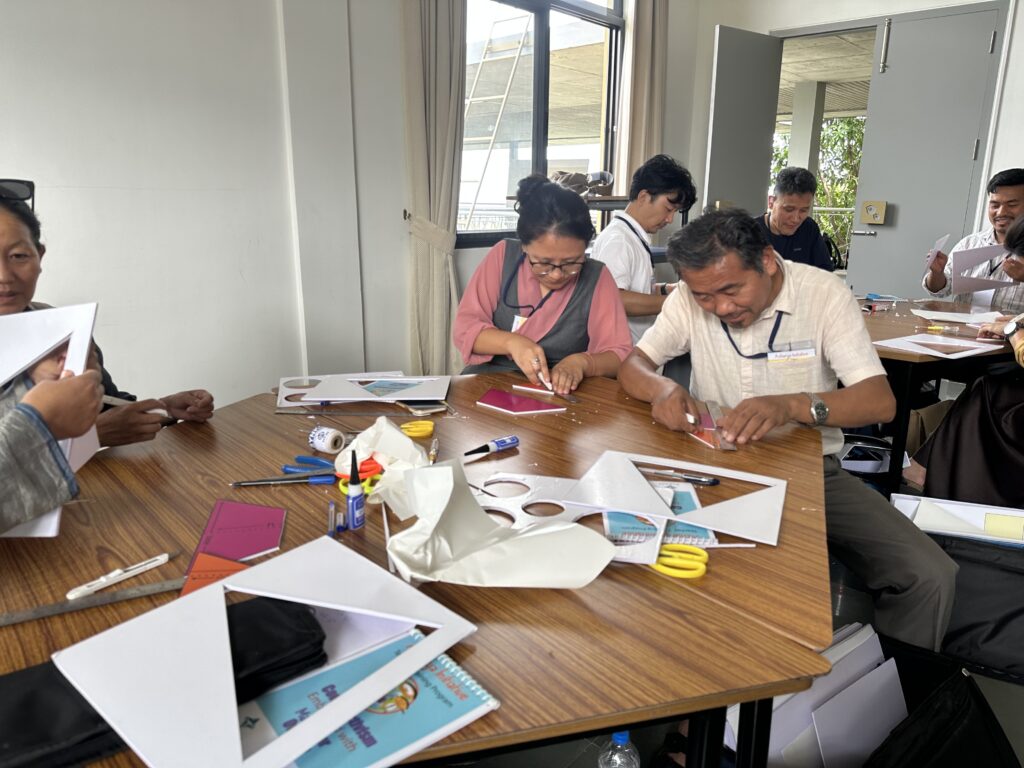
Science and mathematics teachers were later divided into separate groups for “Make Your Lab” sessions. They learned to design and develop low-cost teaching-learning materials using locally available resources. The sessions showed that meaningful science and mathematics learning need not depend on expensive equipment; simple, affordable materials can make abstract concepts practical, visual, engaging, and easier for students to understand.
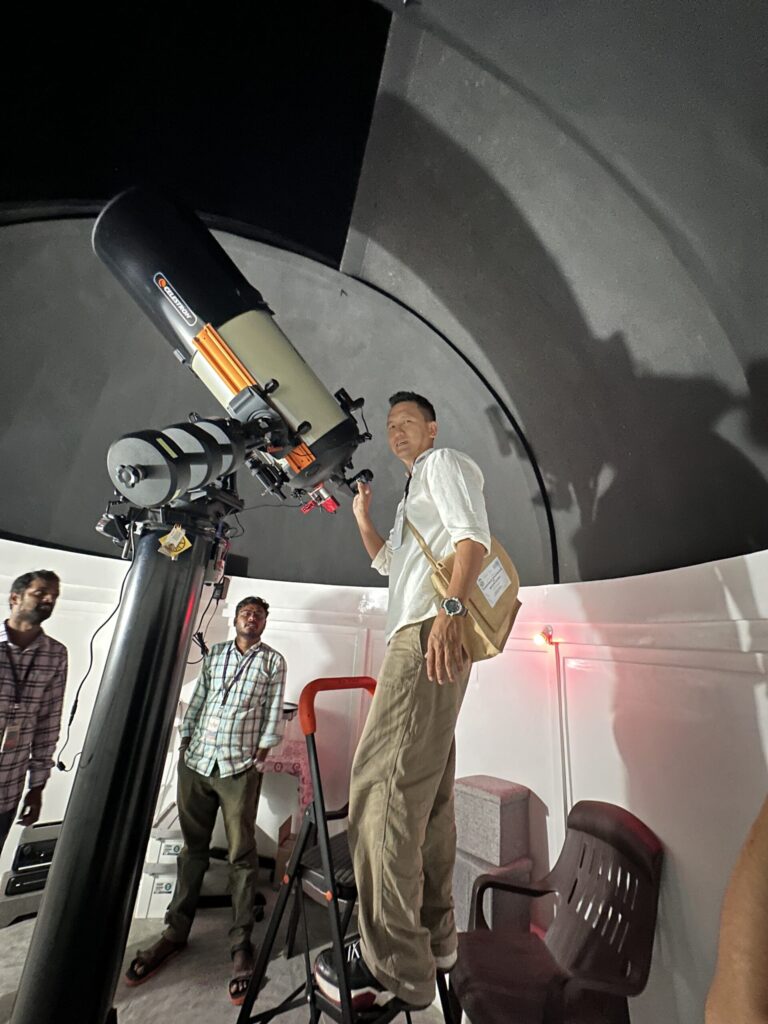
Participants also visited the science and mathematics laboratories, Ramanujan Math Park, Bio-Discovery Centre, and Akash Telescope Viewing Station at the Agastya Creativity Campus. Located across approximately 172 acres at the tri-junction of Andhra Pradesh, Tamil Nadu, and Karnataka, the campus provides an innovative and eco-friendly setting for STEM education, creativity, design thinking, scientific exploration, and innovation.
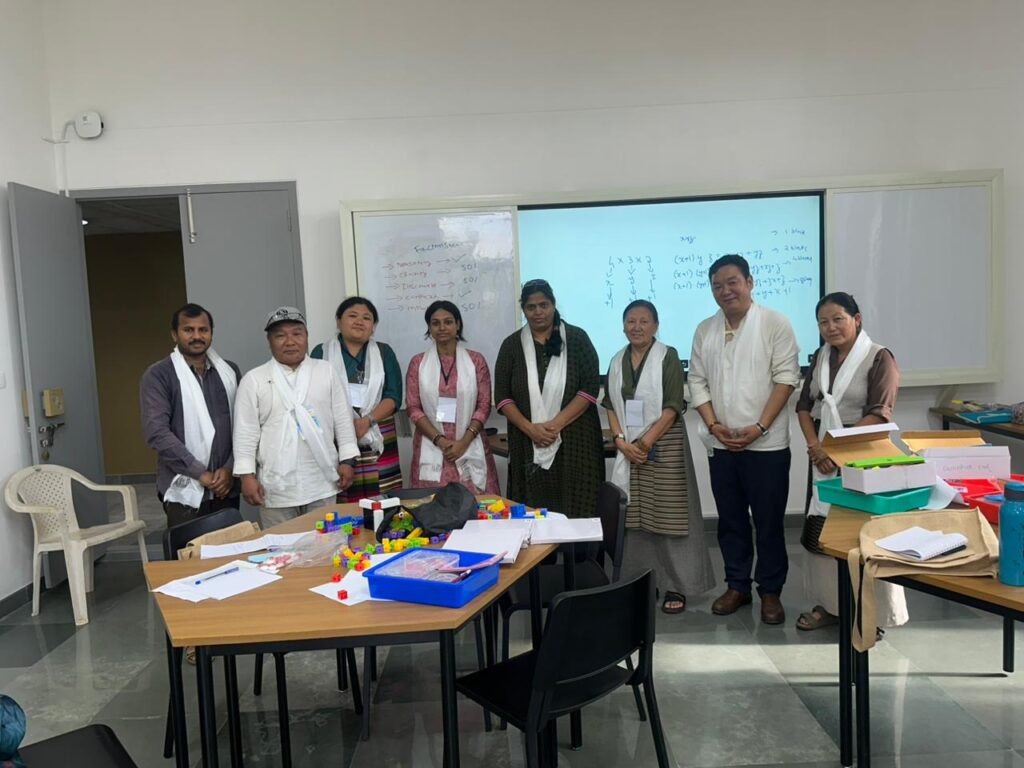
The closing ceremony was held on 27 August, during which all participants received certificates of participation. With support from Mrs. Thinley Pelmo la and Gen Nyime Tsering, Mr. Dorjee Wangdue, Science Education Officer, DoE, presented tokens of appreciation to the Agastya trainers and master trainers for their commitment, teamwork, and contribution to the programme.
Following the workshop, 45 participants returned to their respective schools. Mathematics teachers from STS Chandragiri, STS Kalimpong, STS Darjeeling, and TCV Ladakh remained for a further two-day training on the effective use of mathematics laboratory teaching materials.
The additional training formed part of the Department’s plan to establish well-designed mathematics laboratories and strengthen mathematics learning environments in Tibetan schools. The four selected schools are developing or renovating their mathematics laboratories, while Agastya will provide relevant teaching aids. The training enabled teachers to identify, handle, and use the materials confidently in their classrooms. Subject to fund availability, the Department plans to establish well-equipped mathematics laboratories in Tibetan schools over the next five years.
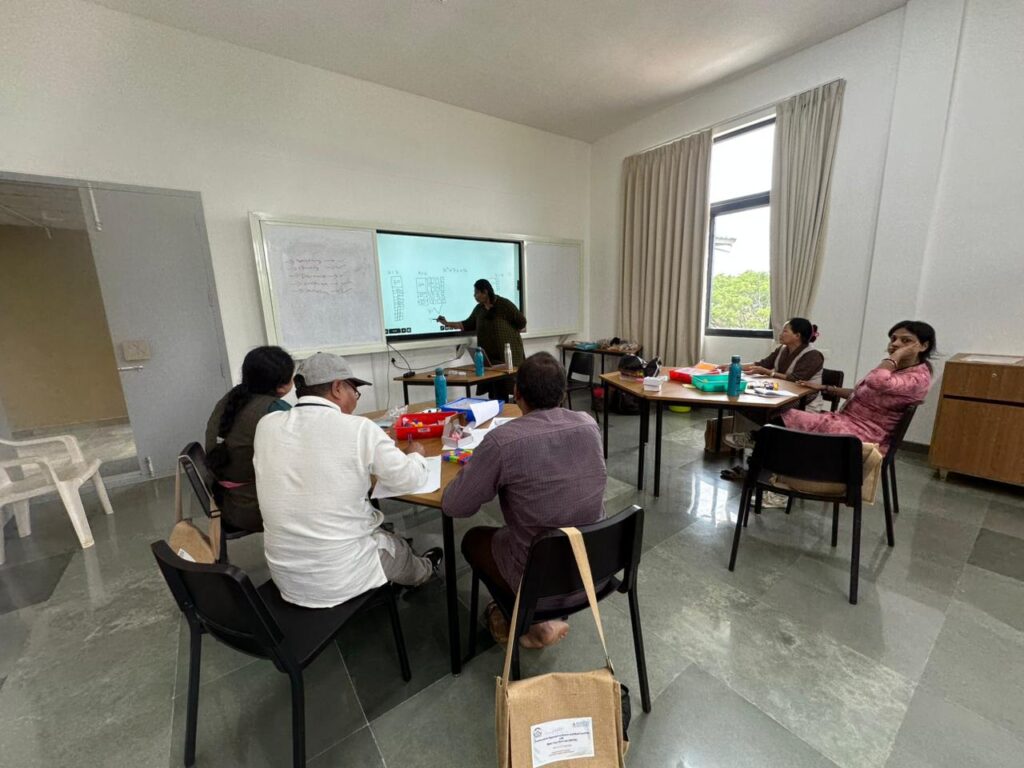
The sessions were led by. Gowri Satya, a Bengaluru-based former mathematics educator and content developer. She introduced the teaching aids, explained their classroom applications, and demonstrated practical methods for helping students understand and visualise mathematical concepts. The Department also developed customised mathematics teaching kits for Tibetan children in Grades I–V, with support from former TCV Mathematics Mentor Thinley Pelmo la and Ms. S. M. Peereshavli of Agastya.
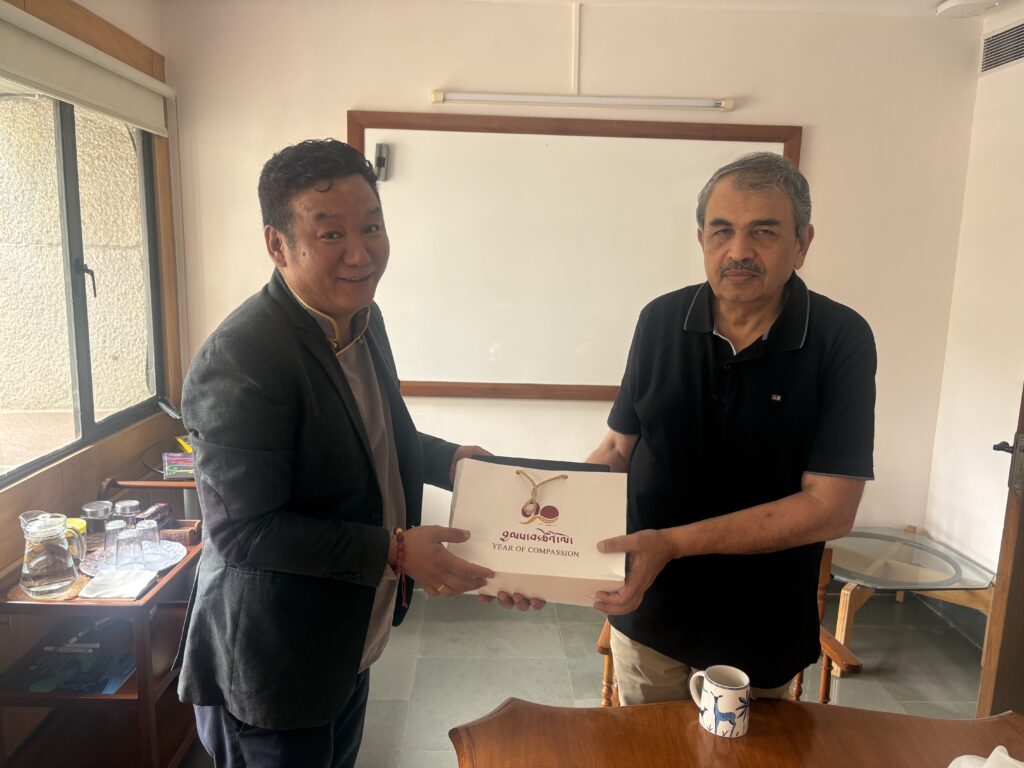
Following the programme, Mr. Dorjee Wangdue visited the National Centre for Biological Sciences (NCBS), Bengaluru, to express the Department’s appreciation for its continued support. He met Professor L. S. Shashidhara, Centre Director, and Dr. Kirthi Nandimath , Education Officer. Discussions focused on continuing research-level internship opportunities for Tibetan science students, the annual STEM excursion programme for Tibetan schools in South India, and possible collaboration on future teacher-training programmes and other STEM education initiatives. The programme was supported by the Government of the United States through the Tibet Fund.