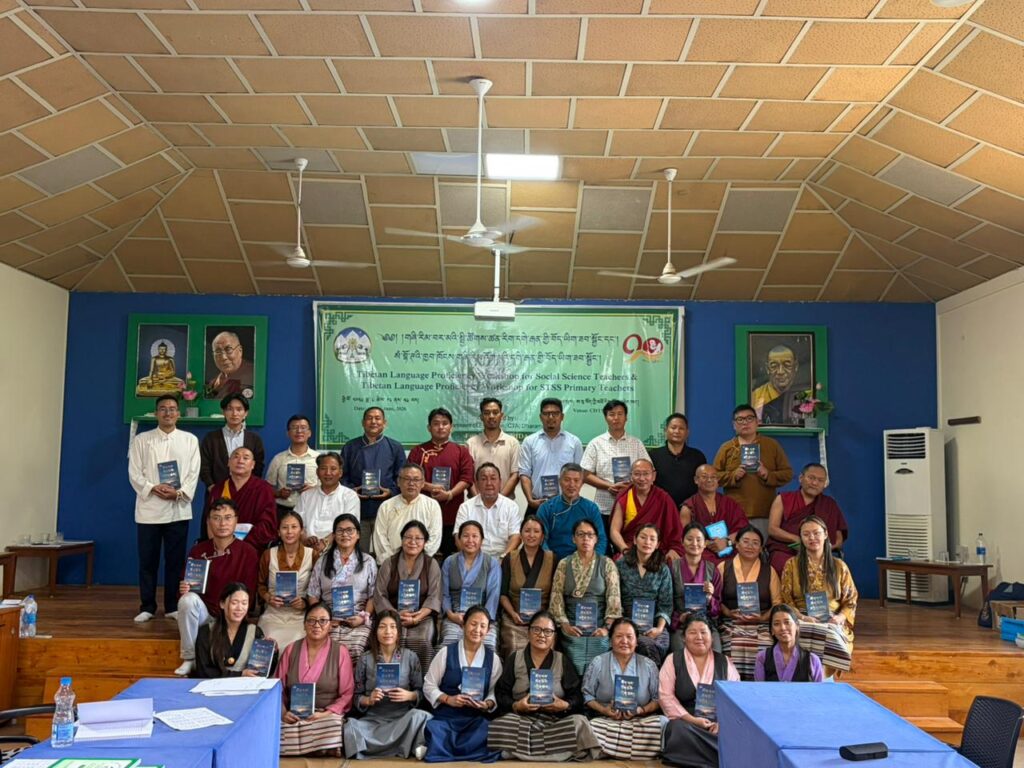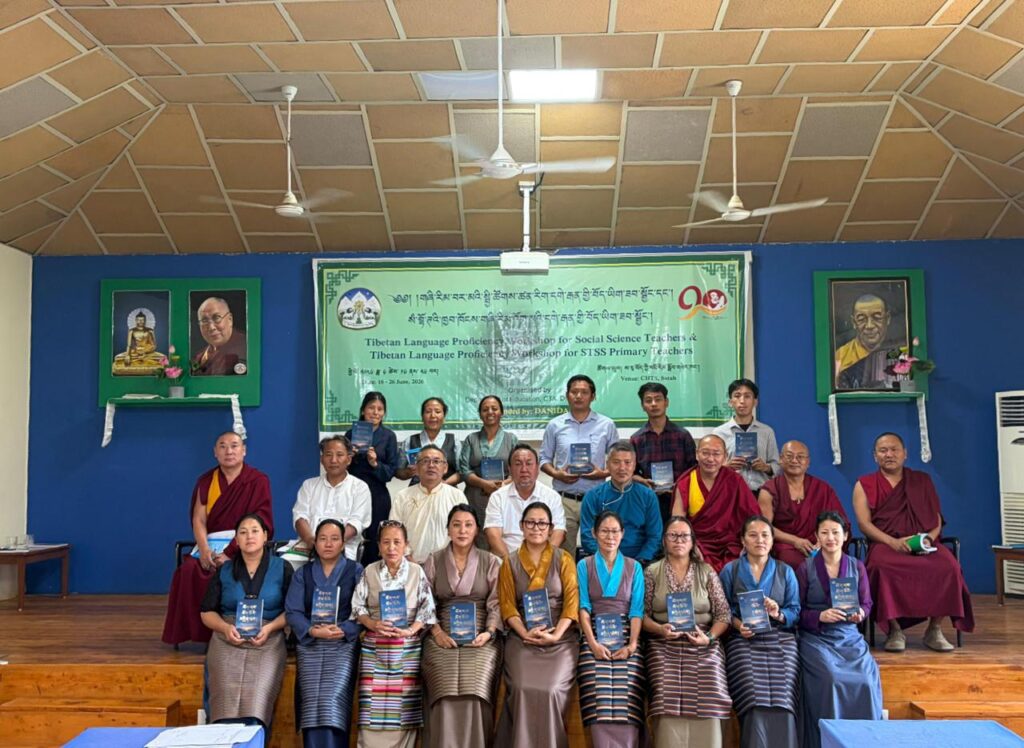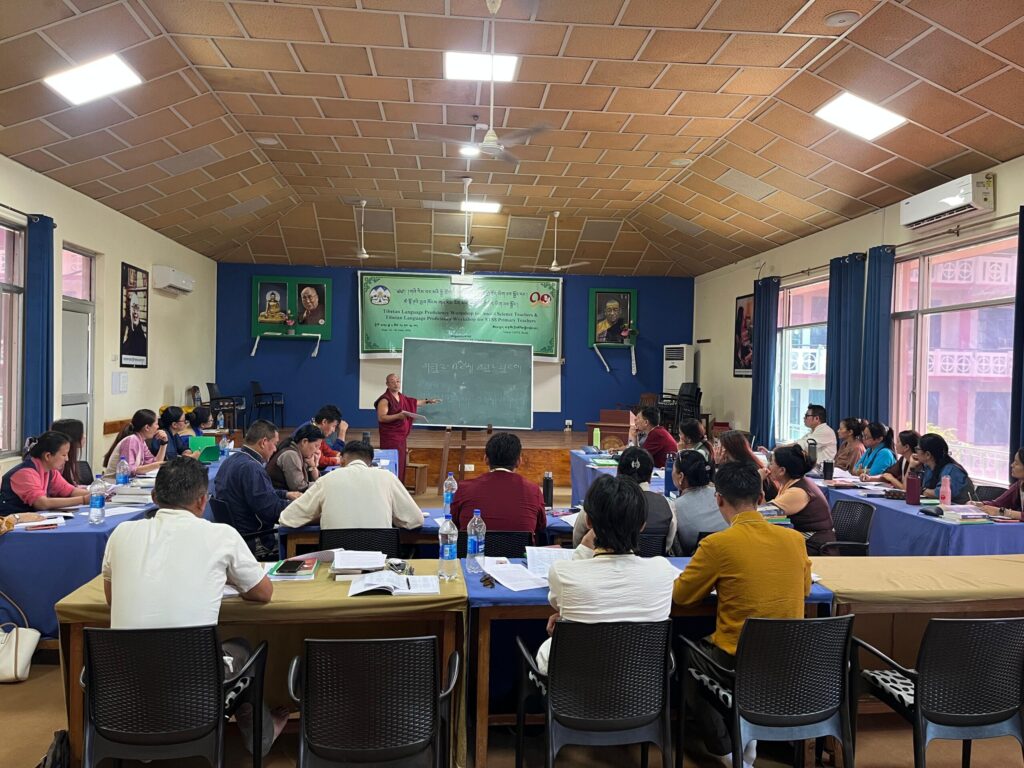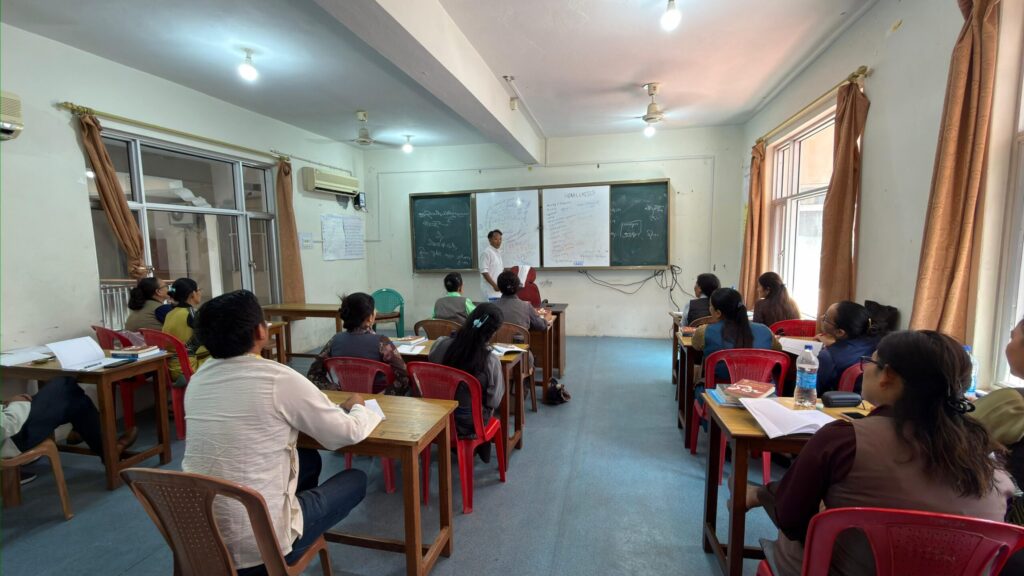
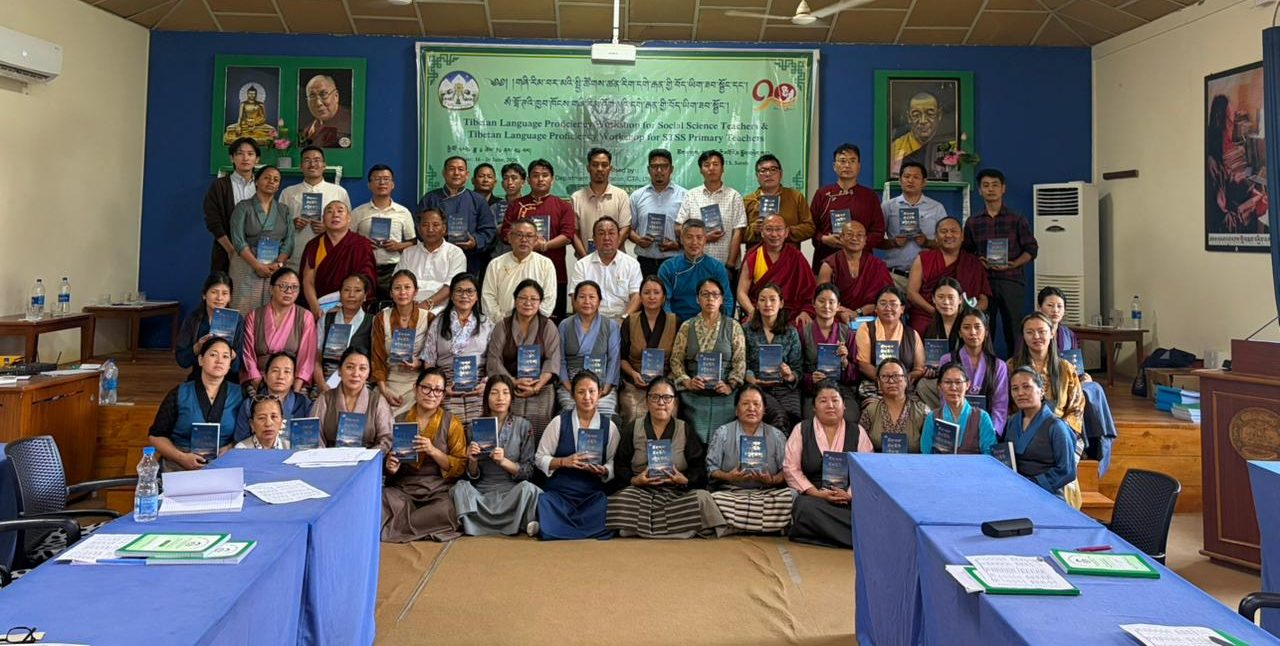
Dharamshala: The Department of Education of the Central Tibetan Administration organised two separate Tibetan language proficiency training workshops for social science teachers and STSS primary school teachers at the Tibetan College for Higher Studies, Sarah, from 16 to 26 June 2026.
The social science teacher training programme was attended by 30 teachers from Tibetan Children’s Village Schools, Tibetan Homes Schools, and 24 schools under the Sambhota Tibetan Schools Society (STSS). The primary teacher training programme was attended by 18 teachers from 10 STSS schools. In total, 48 teachers participated in the two training programmes.
During the 10-day training, participants attended five sessions each day, including classes on Tibetan grammar, transcription, official letter writing, and reading skills. In the transcription and reading skills sessions, participants transcribed and read selected excerpts from His Holiness the Dalai Lama’s latest book, Voice for the Voiceless.
Introducing the programme, Ngodup Tenpa of the Department’s Academic Section explained that the primary objective of the training was to strengthen teachers’ Tibetan language proficiency, thereby enhancing the quality of education provided to students.
Welcoming the participants, Pasang Tsering, Principal of the Tibetan College for Higher Studies, said that, in accordance with the Basic Education Policy for Tibetans in Exile, teachers should pay close attention not only to developing students’ reading and writing abilities but also to nurturing their conduct and way of thinking.
He further noted that, as some lower secondary-level subjects are taught through the medium of Tibetan, it is essential for teachers to continually improve their Tibetan language proficiency. He encouraged all participants to make full use of the training opportunity through dedicated effort and active engagement.
Pasang Tsering also expressed concern about the future of Tibetan language and culture in light of restrictive policies in Tibet and changing circumstances of exile Tibetan community in India. He emphasised the importance of taking proactive measures to preserve and strengthen Tibetan linguistic and cultural traditions.
Referring to contemporary educational approaches, he noted that some modern educational theories and practices should be carefully examined before being adopted within the Tibetan context. As an example, he questioned the view that reading aloud may negatively affect children’s psychological well-being or confidence, pointing out that reading aloud has long been an important part of traditional Tibetan learning. He argued that any impact on a child’s confidence or well-being is more likely to stem from the teacher’s explanation and interpretation of the material than from the act of reading aloud itself.
Following this, Jamyang Wangyal, Head of the Department’s Academic Section, emphasised that a teacher’s own educational competence is fundamental to effective teaching. He encouraged participants to pay close attention to the lectures, actively ask questions, and clarify any doubts in order to gain the maximum benefit from the training.
Referring to the Basic Education Policy for Tibetans in Exile, he noted that social science subjects are to be taught in Tibetan from Classes 6 to 8. At the same time, he suggested that introducing key social science terminology in both Tibetan and English would help students better understand the subject and ease the transition to higher classes, where they encounter a greater number of English terms.
Jamyang Wangyal further advised teachers to create more opportunities for student participation in the classroom. While teachers often tend to dominate discussions, he stressed the importance of encouraging students to express their own thoughts and ideas. He urged participants to temporarily set aside the mindset of being teachers and approach the training as learners, striving to gain new knowledge and perspectives in the spirit of the phrase, “learn to unlearn.”
The training programme concluded with a vote of thanks delivered by Tenzin Yeshi, a staff at the Department’s Academic Section, who expressed gratitude to the lecturers, guests, staff members, and participants for their contributions to the successful completion of the programme.