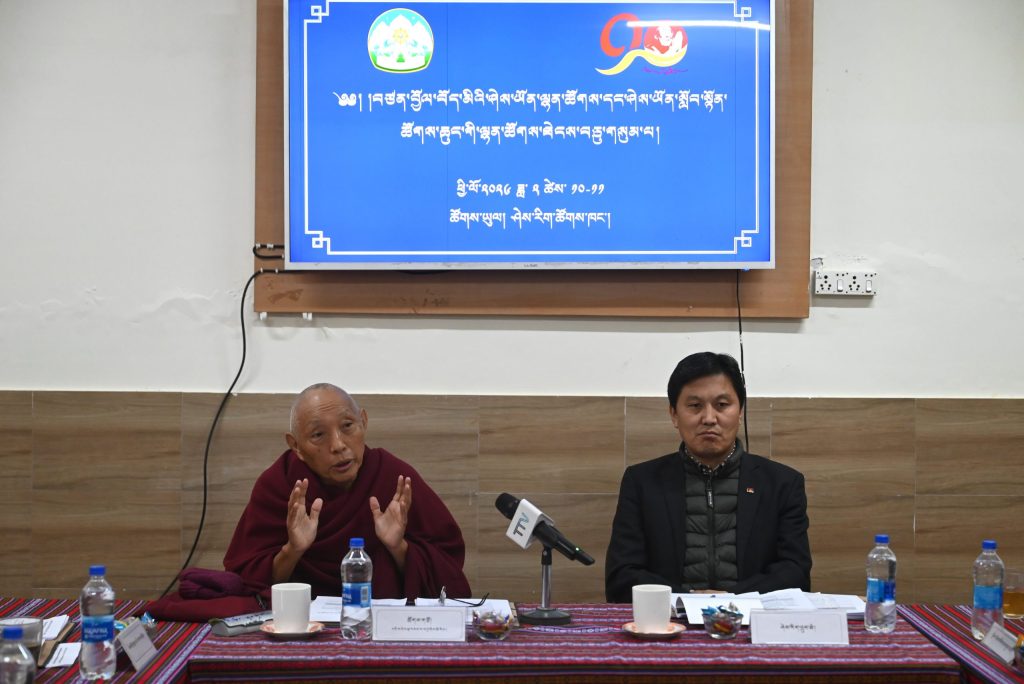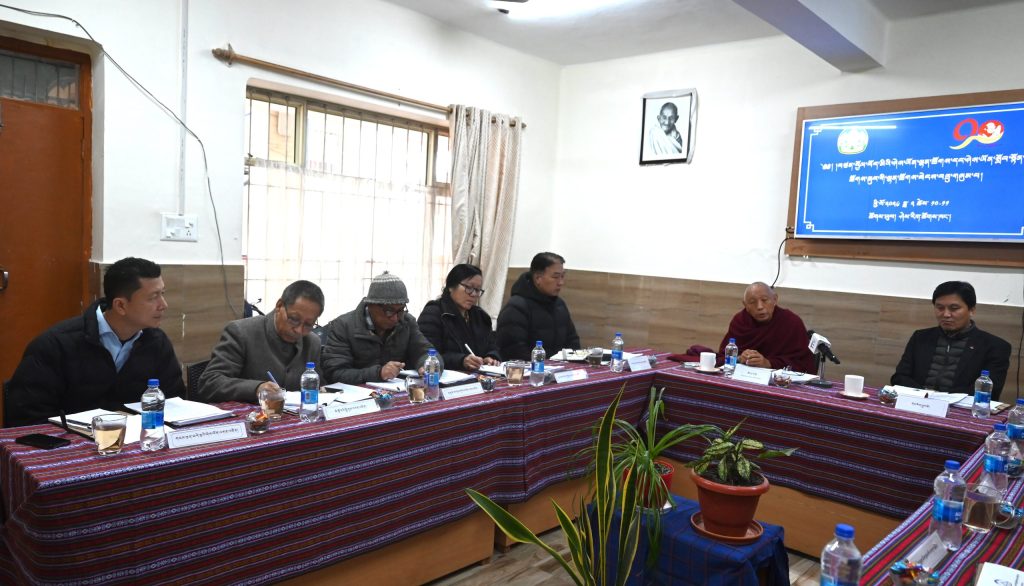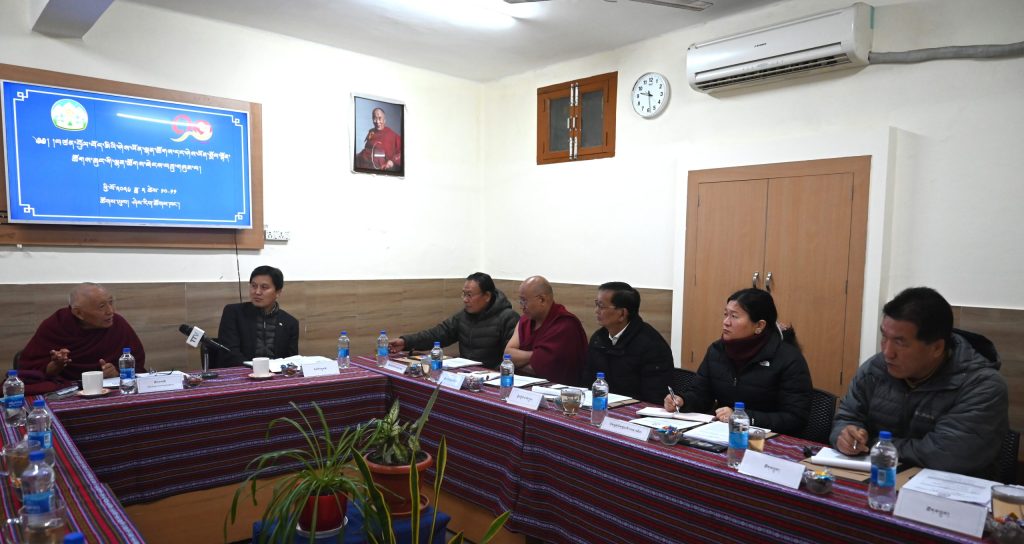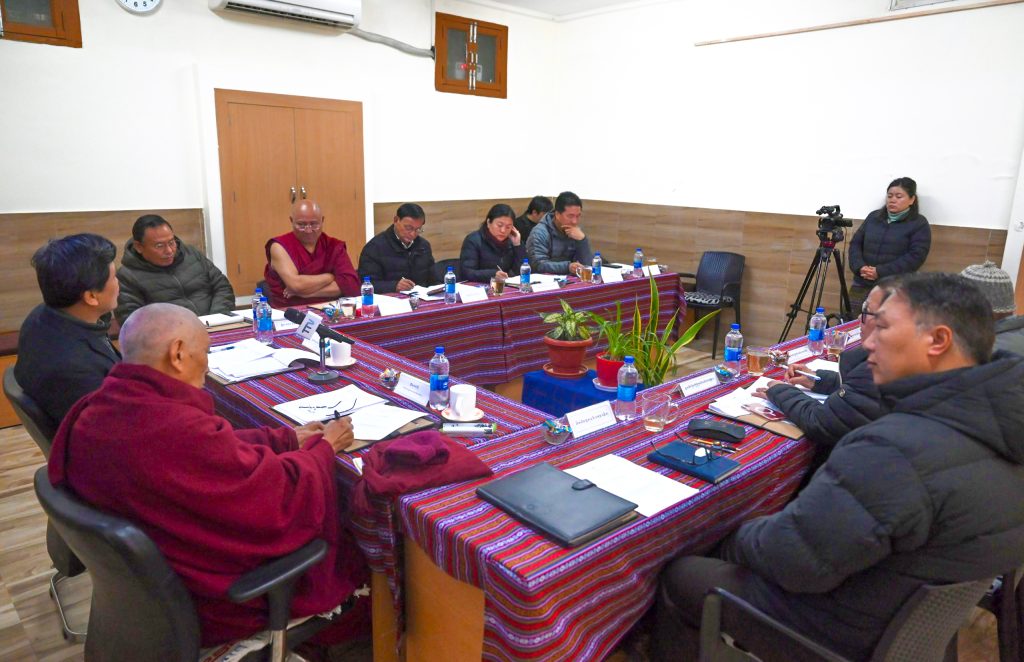
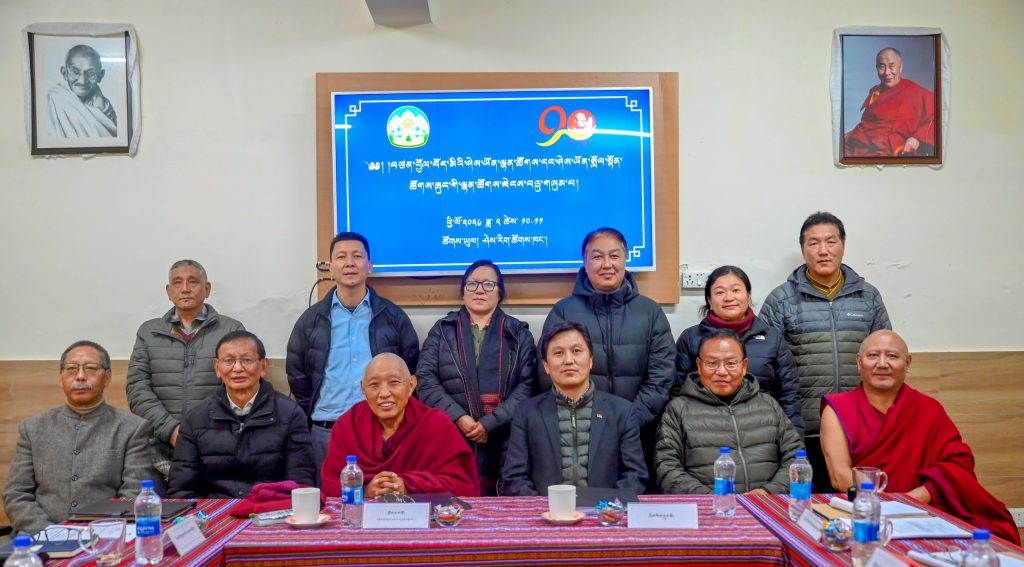
Dharamshala: The 13th annual meeting of Central Tibetan Administration’s Education Council and Advisory Committee began earlier this morning at the Department of Education conference hall. The conference brought together the committee members and senior officials of Education Department to review educational policies, discuss strategic directions for Tibetan education, and strengthen efforts to preserve the Tibetan language and culture in exile.
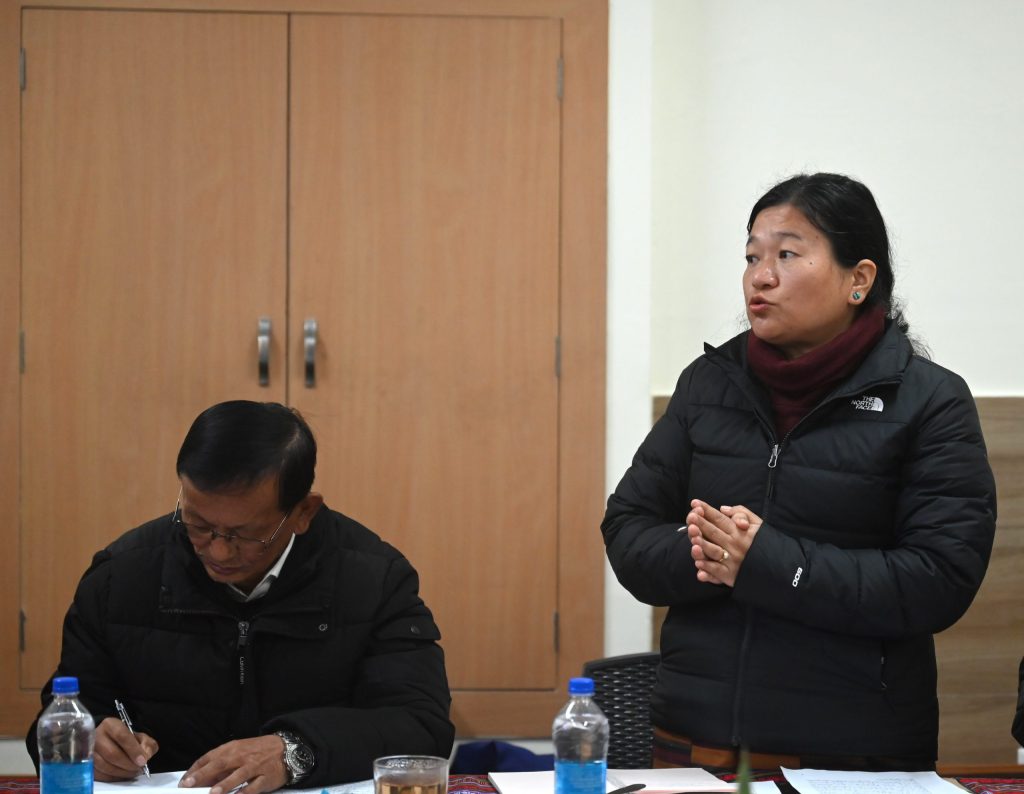
The inaugural session of the conference was led by Education Secretary Jigme Namgyal and attended by Chair of the Education Council Khen Rinpoche Geshe Lharampa Tashi Tsering, along with members of the Education Council and Advisory Committee. Participants included Additional Secretary Tenzin Pema (DoE), Additional Secretary Tenzin Dorjee (DoE), Education Director Ngawang Lhamo (TCV), Education Director Dr Passang Dhundup (THS, Mussoorie), Director Tsering Dhondup (STSS), Education Officer Tenzin Rabgyal (Snowlion Foundation), Professor Ven Lhakpa Tsering (CIHTS, Varanasi), Professor Sonam Gyaltsen (CHTS, Sarah), and Principal Nyima Dhondup (Palkhang Academy).
The session began with a welcome address by Executive Director of the Education Council, Additional Secretary Tenzin Pema, who also presented an overview of the programme and objectives of the joint meeting. Addressing the gathering, Geshe Lharampa Tashi Tsering, the new Chairperson of the Education Council, emphasised the importance of strengthening Tibetan language education as a foundation for preserving Tibetan cultural identity, and prioritised meaningful contributions toward improving the quality of education for Tibetan children in exile.
Referring to the Basic Education Policy for Tibetans in Exile, he called for more comprehensive and adaptive approaches to education. Drawing from his visits to schools in South India, he noted that education should go beyond academics to include health awareness, proper nutrition, and the cultivation of discipline and good manners, underscoring the role of healthy nutrition in students’ overall development. He also raised concerns over the growing influence and impact of mobile phones and social media on learning in schools and monastic institutions, suggesting that Tibetan schools consider timely measures, similar to restrictions practices in parts of Australia and Europe for students below 16 years of age.
While reviewing resolutions from previous joint meetings, the Chairperson drew attention to the declining student enrolment in Tibetan schools and called for evaluating administrative practices and educational methods. He further noted parallel trends in monastic institutions, with fewer Tibetan monks enrolling and a growing number of monastic students coming from other Buddhist countries and the Himalayan region.
Concluding his address, Geshe Lharampa Tashi Tsering encouraged participants to make the most of the two-day deliberations, stating, “As we gather here for the 13th Education Council and Advisory Committee’s joint meeting to improve school education, even if all goals cannot be achieved, meaningful progress must be made.”
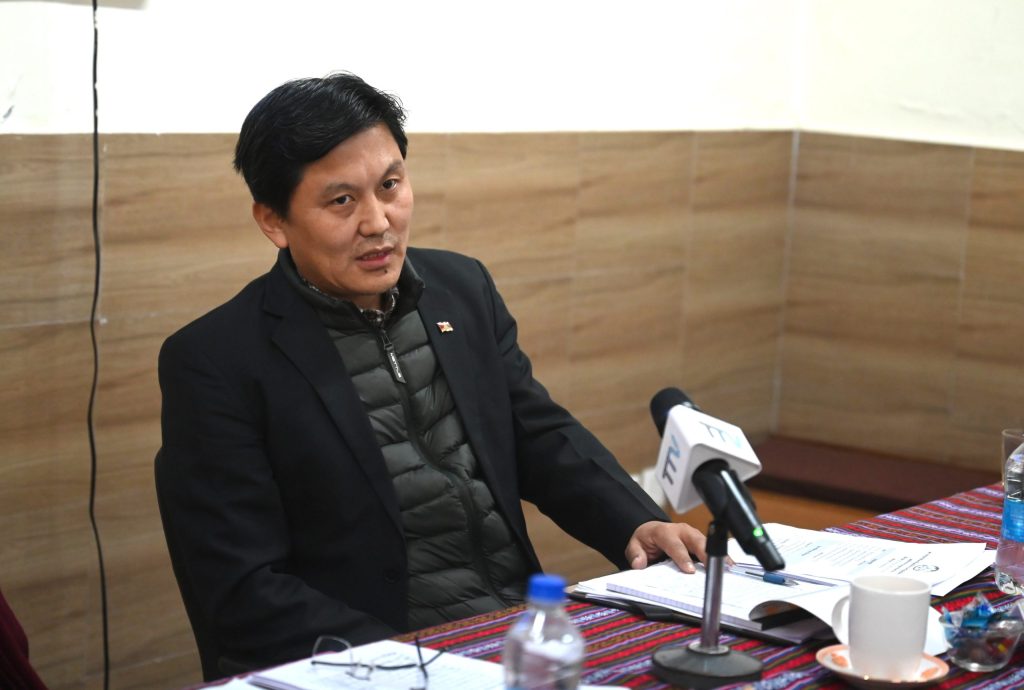
Following, Education Secretary Jigme Namgyal commended Council members for conducting assessment visits to 35 of 51 Tibetan schools, identifying gaps and improvement needs. He recounted efforts to convert the Education Council into an autonomous body, emphasising the importance of an independent education system and stressing the need to safeguard the integrity of Tibetan education in exile.
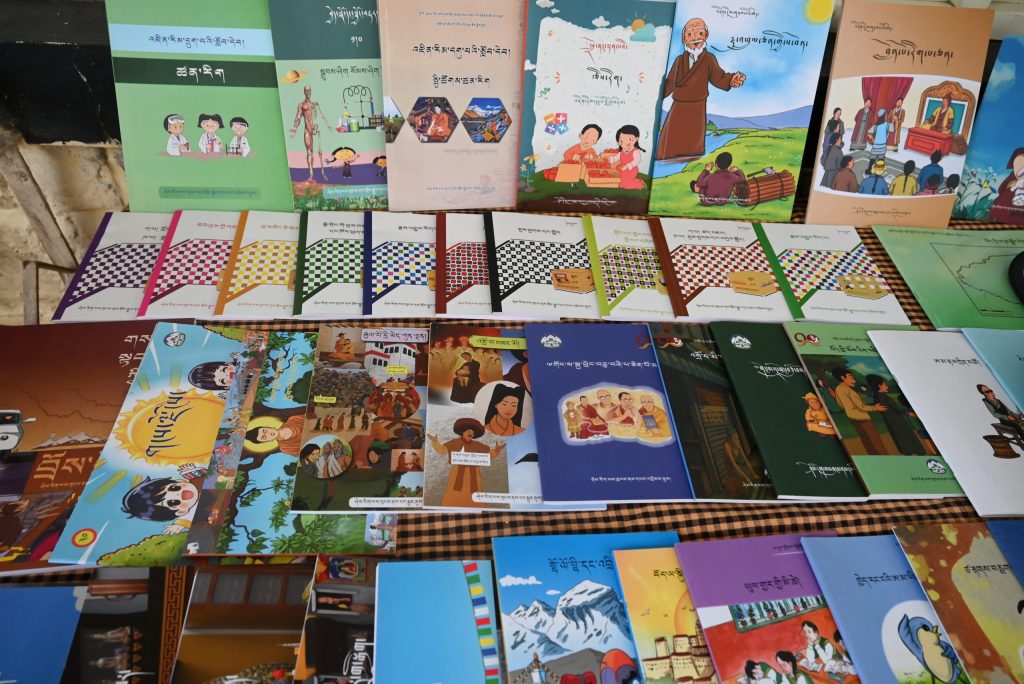
Secretary Jigme Namgyal outlined a range of strategies to upgrade educational standards, including animation-based learning, greater exposure to the outside world, the publication of 20 literature books, reprinting books for kids, translation of educational materials into Tibetan for primary-level students and others. He emphasised strengthening Tibetan language proficiency and communication skills from the primary level onwards, calling for sustained efforts to raise overall standards in Tibetan learning.
The Secretary noted that timely follow-ups on recommendations and closer coordination among schools, administrators, and the Department of Education were essential to achieving sustainable improvements in Tibetan education.
The two-day joint meeting will feature eight sessions. The first and second agenda centred on reviewing resolutions and follow-up actions from the 12th Education Council and Advisory Committee Joint Meetings held last year, along with other matters deemed necessary by the committee.