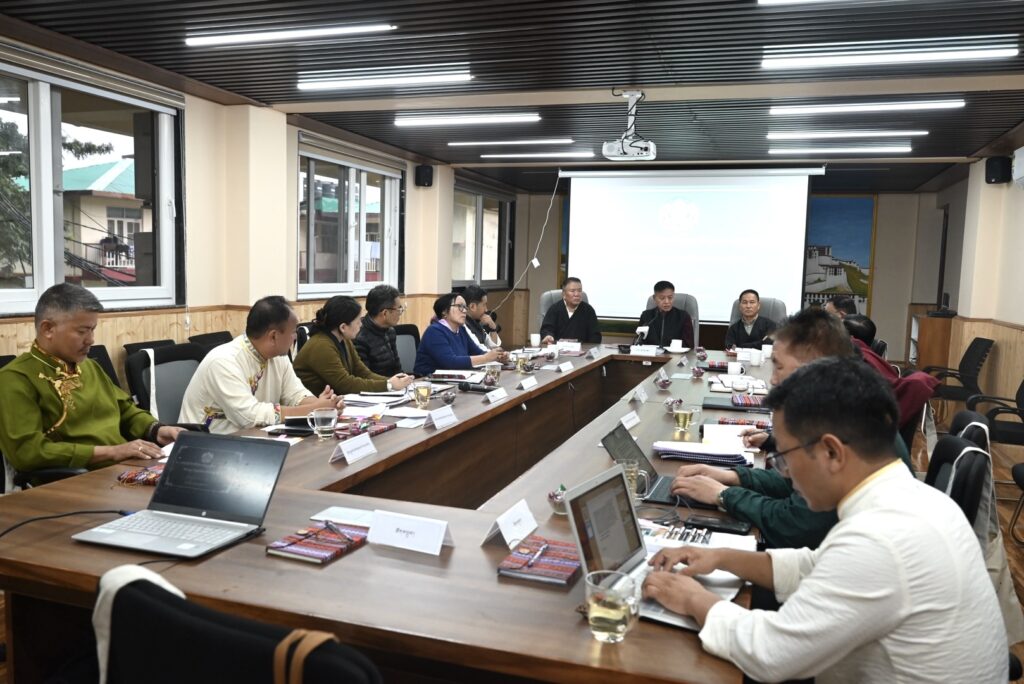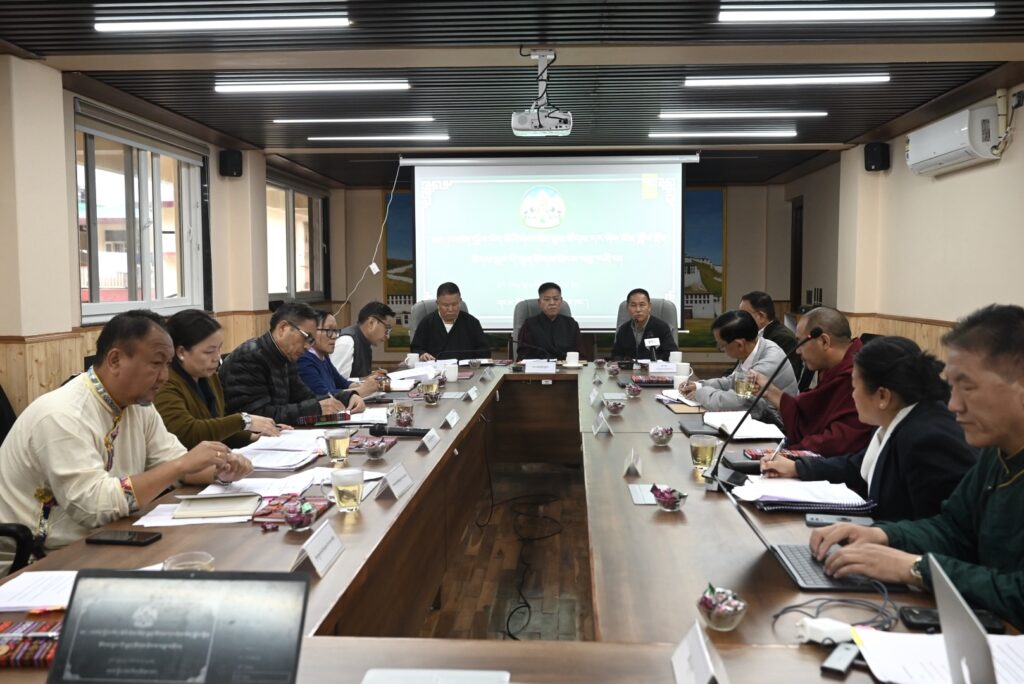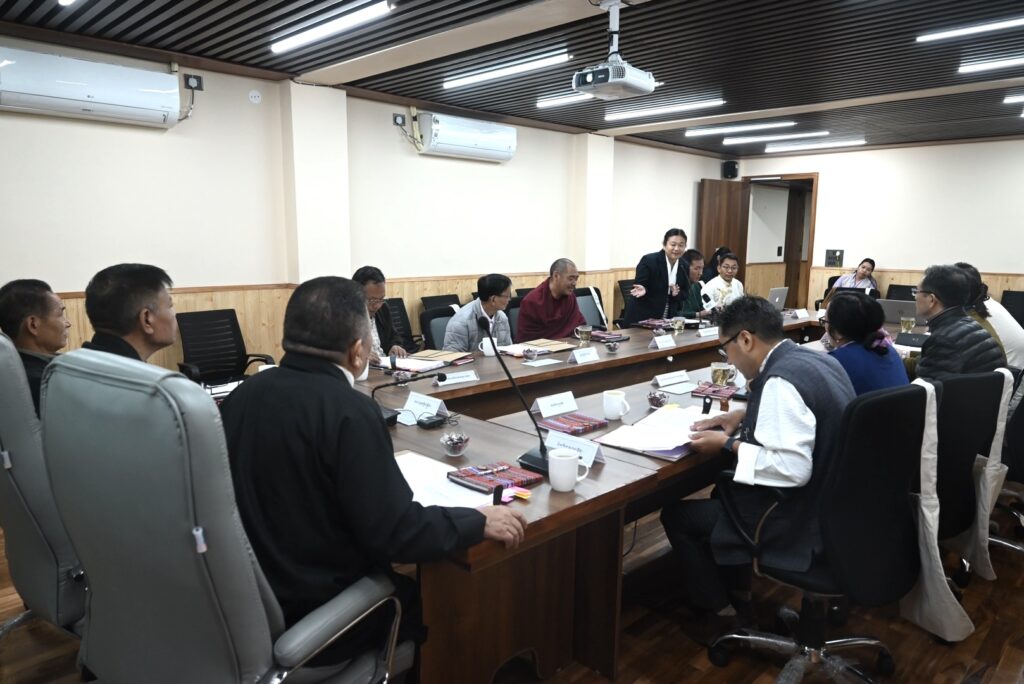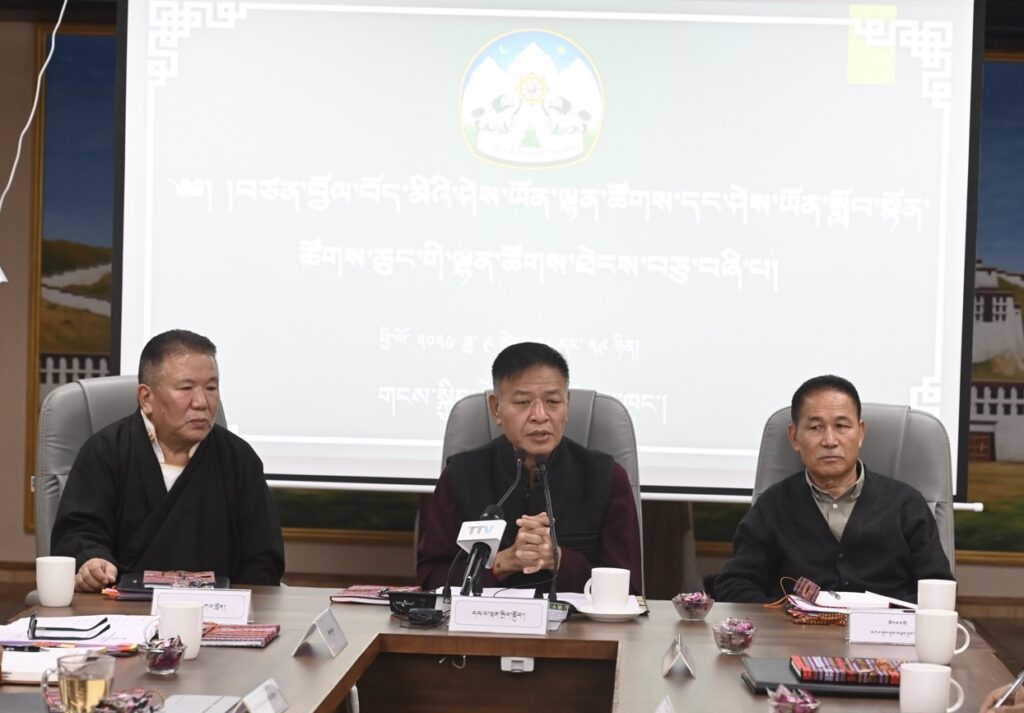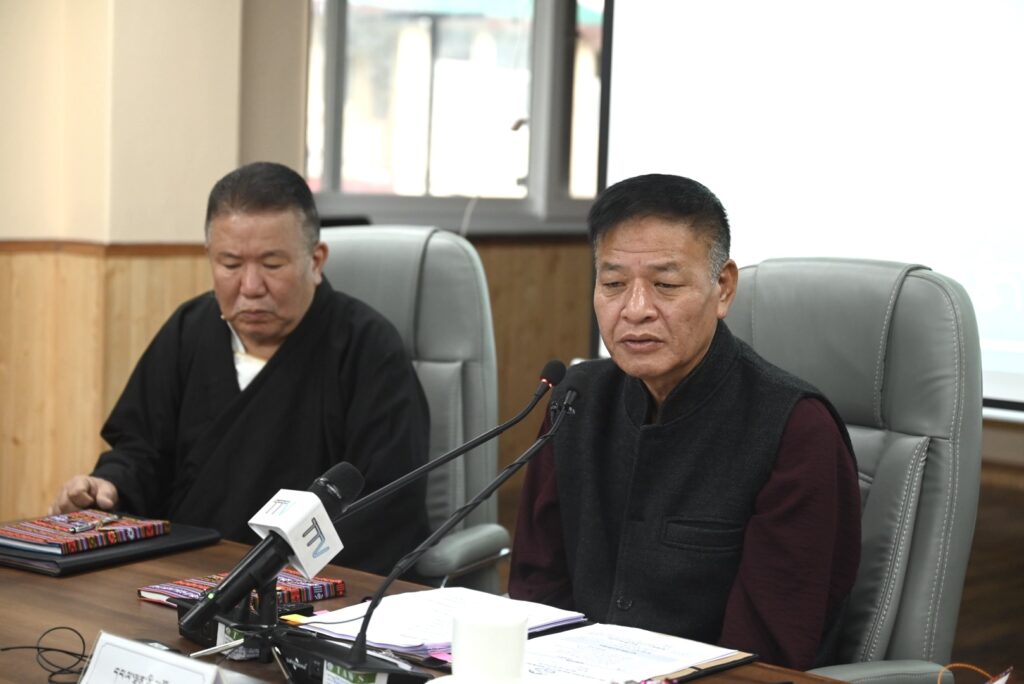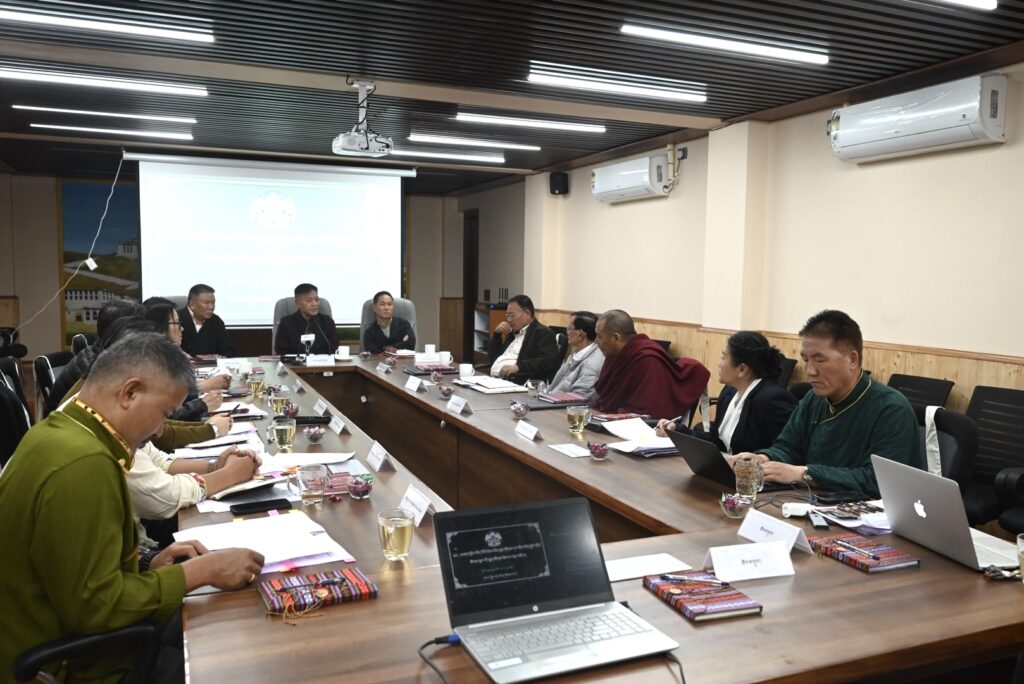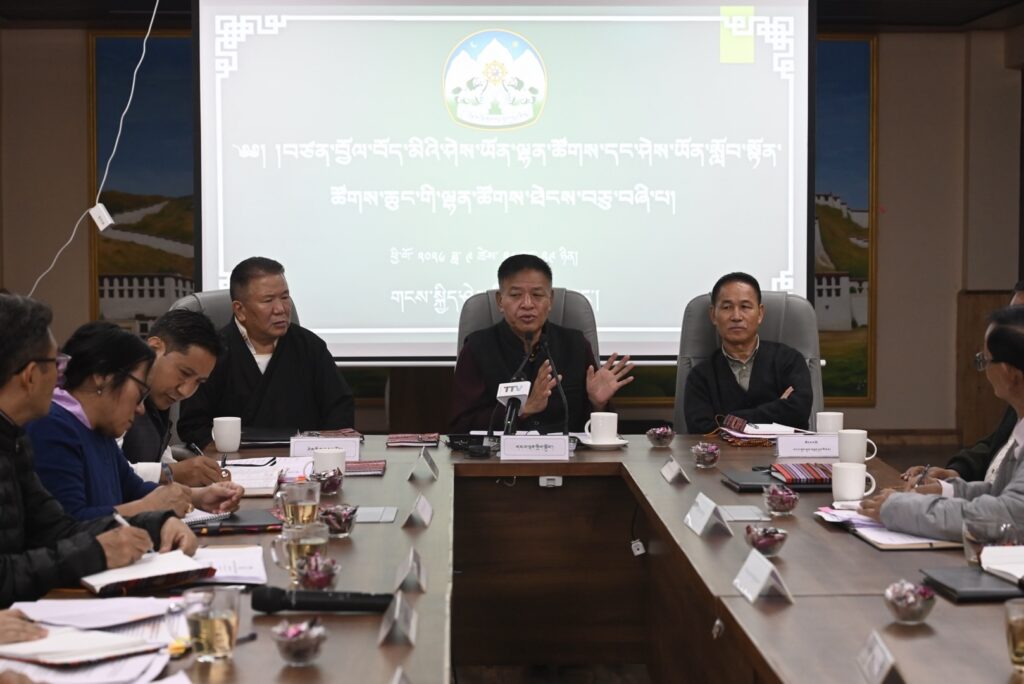
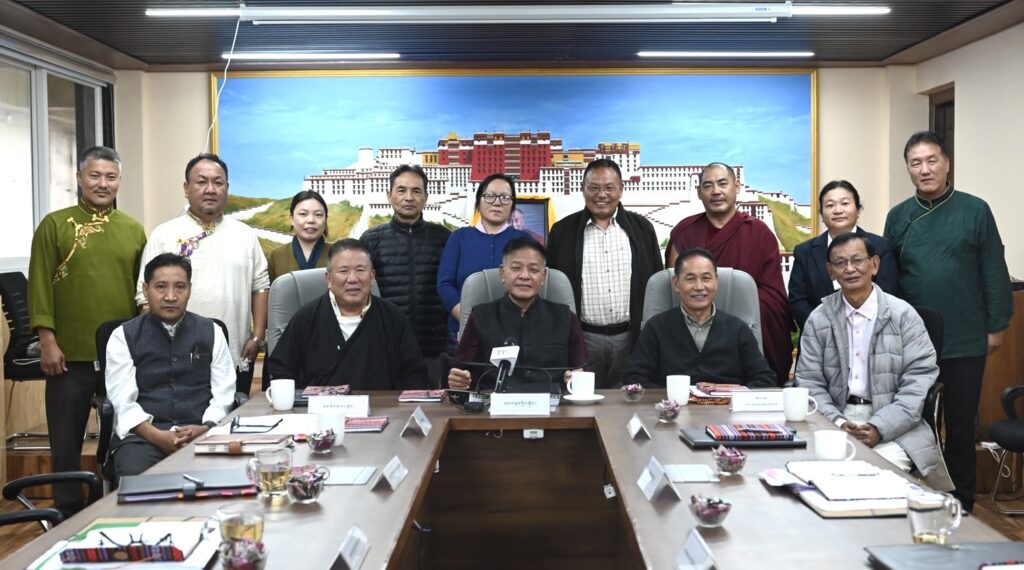
Dharamshala: The two-day 14th meeting of the Central Tibetan Administration’s Education Council and Advisory Committee began earlier this morning at the Department of Education’s conference hall. The meeting focused on reviewing previous resolution, improving educational curricula, strengthen efforts to preserve the Tibetan language and culture in exile.
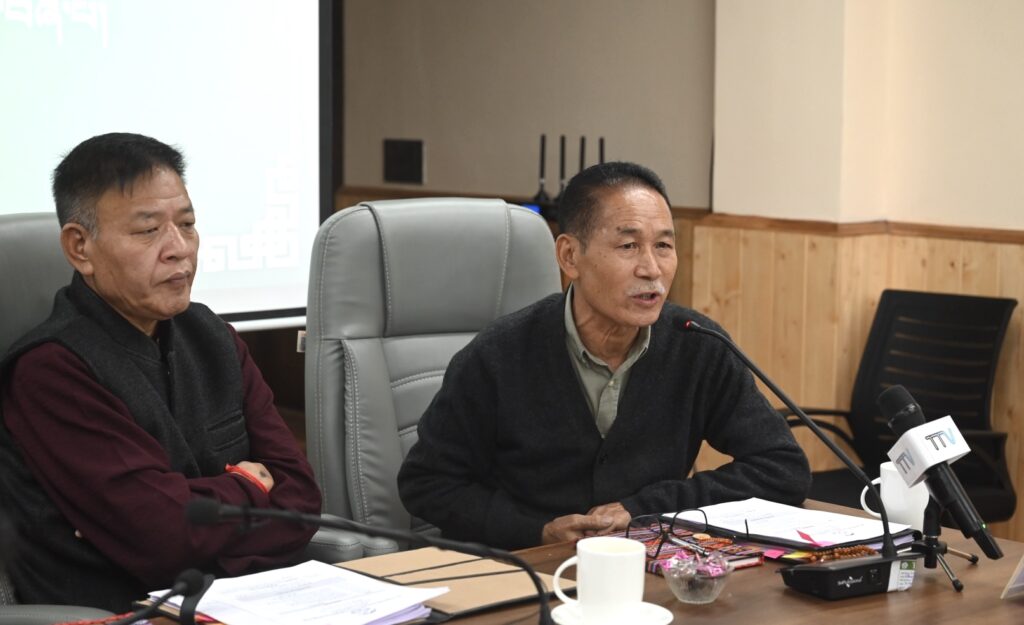
Presided over by Sikyong Penpa Tsering, the inaugural session of the conference was attended by Education Kalon (Minister) Urgen Tenzin, Chair of Education Council Thupten Lungrig (former Education Kalon and former parliamentarian), Education Secretary Karma Choeying, and members of the Education Council and Advisory Committee, namely Additional Secretary Tenzin Pema (Executive Director of the Education Council), Joint Secretary Jamyang Wangyal (Head of the Modern Academic Section), Deputy Secretary Ngodup Tenpa (Head of the Traditional Academic Section), Professor Sonam Gyaltsen (CHTS, Sarah), Principal Nyima Dhondup (Palkhang Academy), Geshe Lharampa Lodoe Sangpo, Education Director Ngawang Lhamo (TCV), Education Director Rinzin Dawa (THS Mussoorie), and Deputy Director Tenzin Ngadon (STSS).
The session began with a welcome address and introduced the programme of the joint meeting by Executive Director of the Education Council, Additional Secretary Tenzin Pema. She further introduced the new Chair of the Education Council Thupten Lungrig, new members Geshe Lharampa Lodoe Sangpo, and THS Mussoorie Education Director Rinzin Dawa.
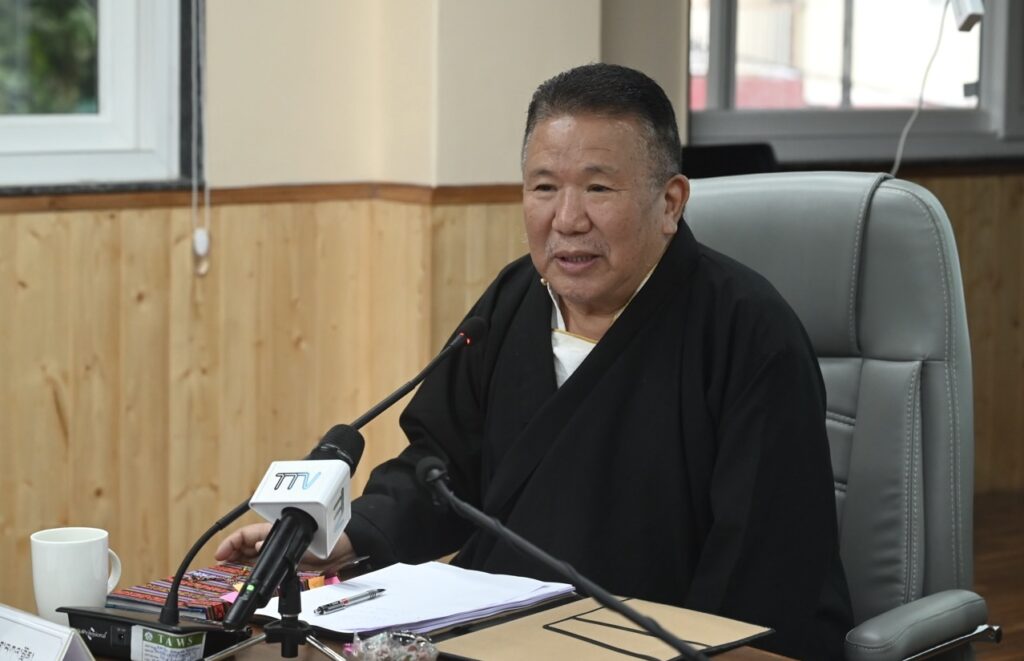
Chair of Education Council Thupten Lungrig, addressed the gathering stating that the Education Council and Advisory Committee’s was established following the introduction of Basic Education Policy (BEP) as well as the importance of knowing BEP, and its background.
Highlighting the historical foundations of Tibetan education in exile, he detailed how the Charter of the Tibetans-in-Exile mandates the establishment of a standardised educational framework. This constitutional directive subsequently led the Central Tibetan Administration (CTA) to formulate and enact the Basic Education Policy for Tibetans in Exile in 2004.
He elucidated that the mandate formalised in the Charter and the subsequent formulation of the BEP are deeply intertwined with the vision of His Holiness the 14th Dalai Lama. His Holiness served both as the primary conceptual architect of the exile educational system and the supreme authority who historically brought it into law. Later when BEP was passed in 2004, and later as a result the Mewoen Tsuglag Petoen School was explicitly established by the CTA to serve as the official model school for implementing the core principles of BEP.
He further emphasised the importance of understanding the historical and key objectives of the BEP when implementing its guidelines, noting educators and administrators must align their daily teaching practices with the core vision to ensure the long-term preservation of Tibetan language and values.
Addressing the gathering, Education Kalon Ugen Tenzin briefed on the significance of the 2004 Basic Education Policy and traced its evolution since the founding of the Gangkyi Petoen School. He noted that the initiative received overwhelmingly positive feedback, paving the way for the progressive implementation of BEP guidelines across various other Tibetan schools in exile. Kalon Ugen Tenzin highlighted the transformative impact of the BEP within the Tibetan community, drawing a parallel to how India’s National Education Policy (NEP) seeks to foster independent, and holistic learning for future generations.
Education Kalon called upon all schools, parents, and the broader society to recognise the importance and long-term benefits of the BEP in shaping the future of the younger generation. He also stressed the indispensable role of parents in understanding and upholding the policy at home, emphasising that family engagement is crucial to nurturing native language proficiency and traditional ethical values.
Addressing broader geopolitical challenges, Education Kalon noted that among the key proposals presented, one specifically focused on strategies to counter the People’s Republic of China’s (PRC) “Law on Promoting Ethnic Unity and Progress.” He highlighted the urgent need to challenge forced assimilation policies and protect Tibetan cultural and linguistic identity against China’s systematic erasure.
Education Kalon also highlighted Tibetan National Identity Preservation Week, designated by the Central Tibetan Administration (CTA) to be observed annually during the fourth week of September. In conclusion, Kalon urged educators, administrators, and community members alike to thoroughly understand the background and fundamental objectives of the BEP, calling unified efforts to safeguard Tibetan identity and heritage for generations to come.
Addressing the gathering, Chief Guest Sikyong Penpa Tsering also spoke about Education Council Chair Thupten Lungrig, who has been associated with the development and implementation of the BEP since its early stages. Sikyong acknowledged his longstanding contribution and involvement in the formulation of the policy.
Sikyong also discussed the potential benefits of making the Education Council and its Advisory Committee more autonomous that greater institutional independence could benefit both bodies as well as the Department of Education and contribute to positive outcomes in the future. He emphasised that this should be kept in mind when considering the future development and functioning of the education system.
In his address, Sikyong Penpa Tsering also spoke about the declining number of students enrolling in Tibetan schools, identifying the low birth rate within the Tibetan community as one of the major factors contributing to the decline in school enrolment. He noted that the issue presents a growing challenge for the Department of Education and requires more than simply offering advice or raising awareness. He emphasised the need to understand the underlying demographic and social factors and to develop practical and sustainable measures to address the changing circumstances of Tibetan schools and communities.
Sikyong further emphasised the need to take into account the current challenges faced by major Tibetan settlements and communities while planning for the future of Tibetan education. He called for forward-looking strategies, clear implementation plans and concrete proposals that respond to changing needs and circumstances.
Sikyong stressed that future policies and programmes should be developed through careful assessment of existing challenges, with a focus on practical implementation and achieving positive outcomes for Tibetan students and the education system as a whole.
Sikyong also highlighted the financial challenges faced by Tibetan schools in Nepal to suggest that sustainability of these institutions requires close coordination between the Department of Education and the Department of Finance. He particularly drew attention to the eight Tibetan schools currently operating in Nepal, including those in Kathmandu, and stressed the need to assess their present circumstances and consider their long-term sustainability.
Sikyong underscored that the future of these schools should be carefully considered in light of changing student enrolment, financial constraints and the evolving needs of Tibetan communities. He called for both departments to work together in developing appropriate strategies, proposals and implementation plans to ensure the continued functioning and effectiveness of Tibetan schools in the years ahead to exile Tibetan communities.
Sikyong also addressed the challenges faced by Tibetans in exile, particularly among the younger generation living abroad. He highlighted concerns over the declining use of the Tibetan language and the difficulties faced in maintaining language proficiency among younger Tibetans. He emphasised the need to strengthen Tibetan language education and improve teaching methods.
Before concluding, Chief Guest Sikyong Penpa Tsering emphasised the urgent need to ensure that younger generations of Tibetans remain informed about the prevailing situation inside Tibet. He expressed concern over policies and laws being implemented by PRC that are increasingly undermining the use and preservation of the Tibetan language. He stressed that the erosion of the Tibetan language poses a serious challenge to the preservation of Tibetan identity, culture and heritage, and called on the younger generation to recognise the importance of safeguarding their language and maintaining their connection to Tibet.
The two-day joint meeting will feature ten session covering various topics. The first and second agenda centred on reviewing resolutions and follow-up actions from the 13th Education Council and Advisory Committee Joint Meetings held on February, along with other matters deemed necessary by the committee.